Features
Get started
See it in action
Upload a document, share a magic link, and give the client one focused place to review and decide.
Start freeFor Agency Operations
Writerflow connects the brief and customer voice, working version, internal review, client decision, and approved-version handoff. See what is waiting, who needs to act, and which version is under review across client work.
Review one agency workflow with the founderBring a recent or sanitized client piece.
The deadline is visible. The review path is not.
Your project-management tool can track the campaign deadline. But the written work may still move through documents, chat, email, and people outside your agency. The task looks current while the decision behind it is difficult to retrieve.
A calendar can say Friday. It does not necessarily show whether the copy is with an editor, the account lead, the client, or legal. Agency operations ends up asking each person for the missing state.
One reviewer comments in a document while another replies to an attachment. The team has to determine which changes apply to the version currently presented for a decision.
The work leaves the agency workspace and enters a client inbox. Without a visible review stage, account managers have to ask whether the client opened it, requested changes, or is still deciding.
When ownership changes, the next person needs the brief, revision context, current version, reviewer, and decision state. If those live in separate systems, handover starts with reconstruction.
Keep campaign planning in the tool your team already uses. Writerflow carries the written-content route that deadline depends on: from the piece-specific brief through human review and the approved handoff.

One connected content route
Writerflow is content workflow software for agencies. It keeps repeated agency context available while giving each reviewer a focused place to review the submitted version and respond.
Keep what the piece needs to accomplish and how the client should sound close to the working content. Writers and reviewers can return to the same piece-specific context instead of searching across folders and messages.
Set named stages for the people who need to act. The agency can review the words first, then invite the client or another external reviewer to the submitted version when it is their turn.
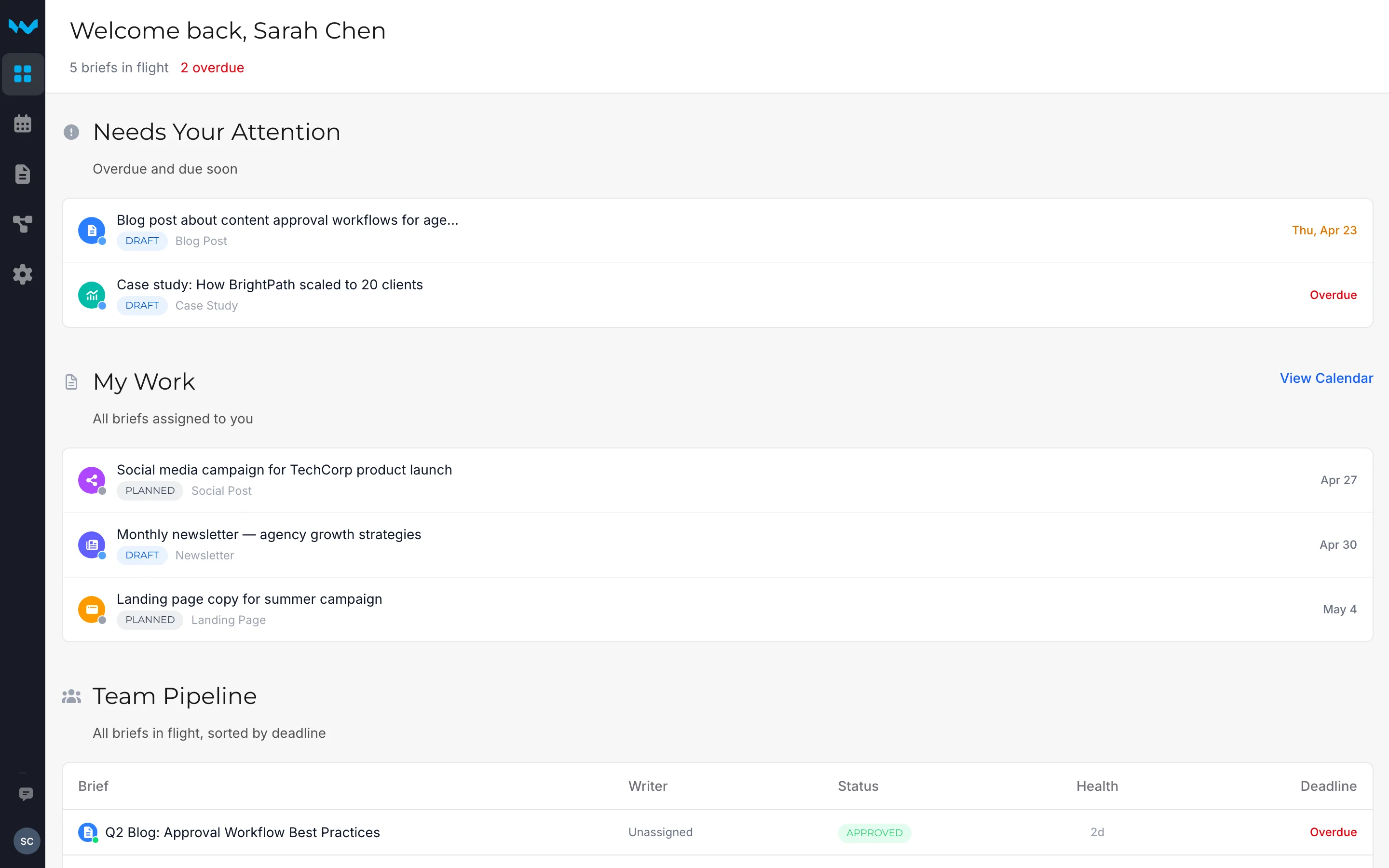
Use the dashboard to see what is in draft, in internal review, waiting on a client, or approved. The status stays attached to the content instead of being copied into a separate tracker.
Writerflow records the named reviewer, response, timestamp, and submitted version. Hand off the approved version with that decision record when the work is ready for its next destination.
The dashboard brings the current review stage into view across client work. Open the piece when you need its brief, comments, submitted version, or decision history.

One route, different seats
The agency team works with the operating context. Invited reviewers get a focused view of the content and the decision in front of them.
See the current stage across client work, identify the named person expected to act, and open the underlying piece when a deadline needs attention.
Review the words against the brief and customer voice, leave comments on the content, and move the submitted version to the next named stage.
Know which version is with the client, whether a response is still pending, and what decision is recorded before preparing the handoff.
Open one focused review link, read the submitted version in context, request changes, or sign off without joining the agency workspace.
Use the agency workflow audit to map the review stages, handoffs, and coordination inputs behind your current process. You can see the result before deciding whether to test a different route.
Run the agency workflow auditKeep the brief, review stages, client decision, and approved-version handoff connected around work your agency is already delivering.
Review one agency workflow with the founderA recent or sanitized piece is enough to start.